Common Red Flags When Buying Peptides Online
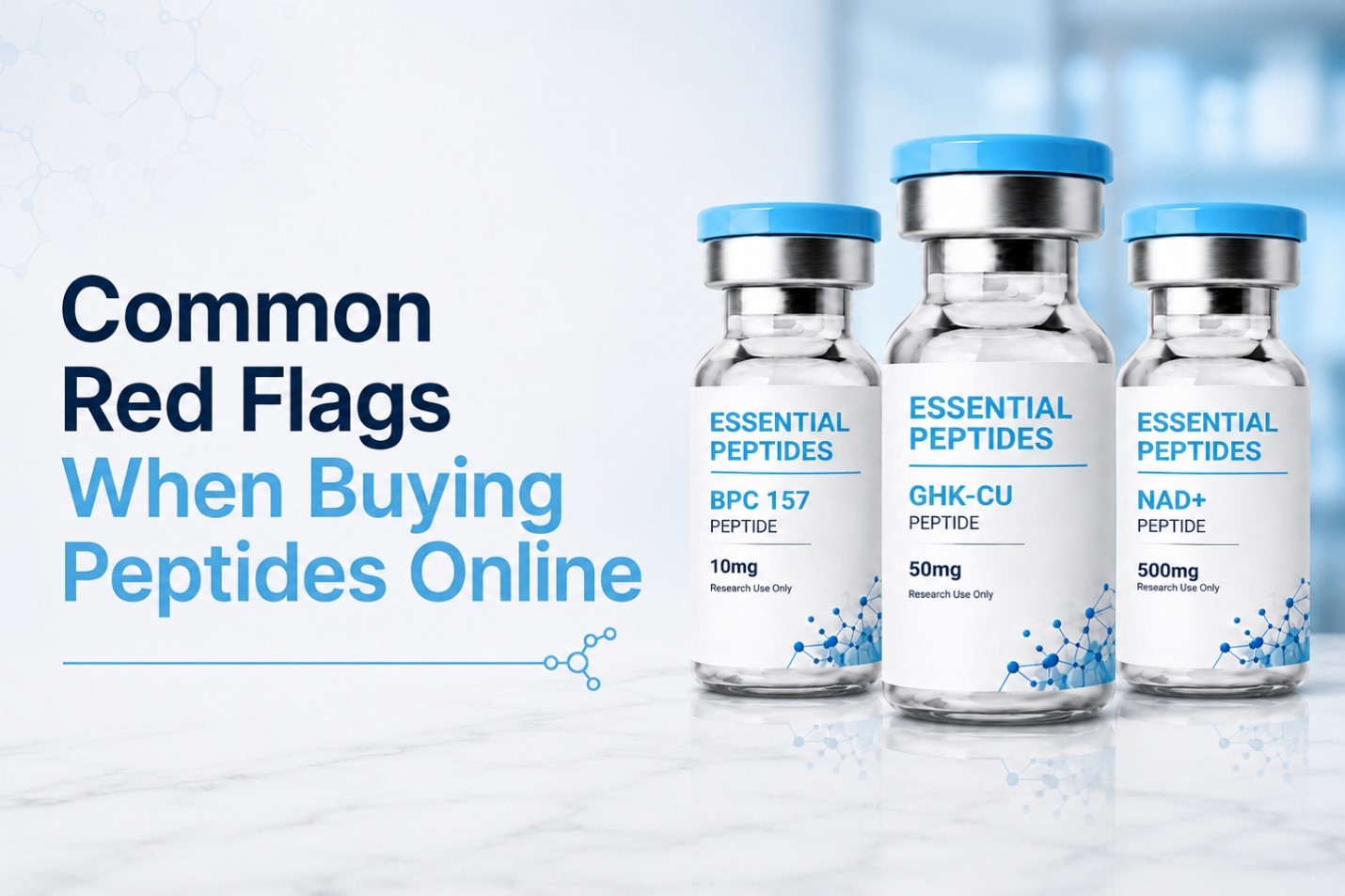
The market for peptides online has expanded quickly over the past few years, and along with genuine, well-run suppliers, a fair number of low-effort sellers have shown up too. Some cut corners on testing. Others simply repackage unverified stock and hope nobody asks questions. Before you place an order, it helps to know exactly what separates a credible seller from a risky one.
Below, we walk through the warning signs worth watching for, and what a properly run research peptide supplier should actually look like.
Why Verification Matters Before You Order
Peptides are sensitive compounds. Purity, storage, and handling all affect their integrity, and none of that is visible just by looking at a vial. A seller’s claims are only as good as the evidence behind them.
That is why checking a supplier’s practices matters as much as checking the product itself. A few minutes of research now can save you from wasted money later, or worse, unreliable material that ruins an entire batch of work.
No Certificate of Analysis
This is the biggest one, and honestly, the easiest to check. A Certificate of Analysis (COA) confirms purity and identity through independent lab testing. If a seller cannot produce one, or only offers a vague promise to send it if you ask, that is a problem.
Watch for:
- No COA listed anywhere on the product page
- COAs that look generic or reused across different products
- Refusal to provide batch-specific documentation
- Testing described only in marketing copy, with nothing to back it up
A supplier that stands behind lab tested peptides UKbuyers can trust will make this information easy to find, not something you have to chase down over email.
Prices That Seem Too Good
Peptide synthesis and independent testing both cost money. When a price sits well below the market average, something in that chain has usually been skipped.
- Underpriced products often skip third-party testing entirely
- Some sellers dilute or mislabel concentration to cut costs
- Extremely cheap listings sometimes indicate counterfeit or expired stock
Fair pricing does not always mean the most expensive option is best either. It simply means the price should make sense given the testing, sourcing, and handling involved.
Vague Purity Claims
High purity and premium quality are phrases that sound reassuring but say almost nothing on their own.
A trustworthy peptide supplier UK researchers rely on will state an actual purity percentage, usually 98% or above, and back it with lab data. If a listing avoids specifics altogether, treat that as a signal to look elsewhere.
What Proper Purity Reporting Looks Like
- A clearly stated percentage, not a general claim
- HPLC or mass spectrometry results referenced directly
- Batch numbers that match what is printed on the vial
No Clear Storage, Shipping, or Return Policy
Peptides degrade quickly if handled poorly. A seller who does not explain how products are stored or shipped is either inexperienced or simply not paying attention to detail.
Questions worth asking before you buy:
- Are products shipped with proper cold-chain packaging?
- Is dispatch timing clearly stated, not just implied?
- What happens if a package arrives damaged or delayed?
- Is there a written return or replacement policy at all?
Ambiguity here is rarely accidental. Clear answers usually reflect a business that has its processes sorted out.
Poor Communication and No Real Support
Response time tells you a lot. If a seller takes days to reply to a simple question, or worse, never replies at all, that pattern will likely continue after your order is placed too.
A genuine research peptide supplier typically offers more than one way to reach them, whether that is email, live chat, or even a direct phone line. Support should feel accessible, not like sending a message into a void.
Missing Batch Numbers or Traceability
Every legitimate batch of peptides should have a traceable number linking it back to its specific test results. Without this, there is no way to confirm that the COA you received actually matches the vial in your hand.
Signs of poor traceability include:
- Products shipped without any batch identification
- COAs that do not reference a matching batch code
- No way to request historical testing data for past orders
What a Trustworthy Supplier Actually Looks Like
Reliable sellers tend to share a few consistent habits, regardless of size or catalog.
- They publish purity data openly, not on request only
- They explain sourcing and testing processes clearly
- They maintain consistent batch-to-batch quality
- They offer responsive, UK-based support
- They provide transparent shipping and storage details
None of this requires guesswork on your part. It just requires checking before you buy, not after.
Quick Checklist Before You Buy
Before placing an order, run through this short list:
- Is a COA available for the exact batch you are buying?
- Does the listed purity match industry standards?
- Is pricing reasonable given the testing involved?
- Are storage and shipping practices clearly explained?
- Can you reach a real support team quickly?
- Is there batch traceability from vial to test result?
If most boxes are ticked, you are likely dealing with a supplier worth trusting.
Overly Polished Reviews With No Detail
Genuine customer feedback tends to mention specifics: a delivery time, a particular product, or a small detail about packaging. When every review on a site reads the same way, using near-identical phrasing and generic praise, it is worth pausing before trusting it.
Things to look out for:
- Reviews posted in clusters within a short time frame
- No mention of specific products, batch numbers, or delivery experiences
- Identical sentence structures across multiple “different” customers
- No negative or mixed reviews at all, which is rare for any real business
A supplier confident in their process usually has a mix of feedback, some glowing, some average, and that variety is often a better sign of authenticity than a wall of five-star praise.
Conclusion
Spotting these red flags is not about being overly cautious. It is about protecting the accuracy of your research and making sure every pound spent goes toward material you can actually rely on. A little diligence upfront saves considerable frustration later.
At Essential Peptides, we focus on the fundamentals that matter most: independently tested batches, transparent purity data, and UK-based support that actually responds. Researchers deserve suppliers who make trust easy to verify, not something they have to assume.
Frequently Asked Questions
1. How can I verify if peptides online are genuinely lab tested?
Check whether the supplier provides a batch-specific Certificate of Analysis with purity percentages backed by HPLC or mass spectrometry results.
2. What purity level should a reliable peptide supplier UK offer?
Most reputable suppliers report purity at 98% or above, with documentation available for each batch sold.
3. Why is batch traceability important when buying research peptides?
It confirms that the specific vial you received matches the exact test results provided, rather than a generic or reused certificate.
4. Are cheaper research peptide supplier options always risky?
Not always, but unusually low prices often indicate skipped testing or diluted concentrations, so it is worth reviewing documentation carefully before purchasing.