GHK-Cu Explained: The Science Behind This Copper Peptide
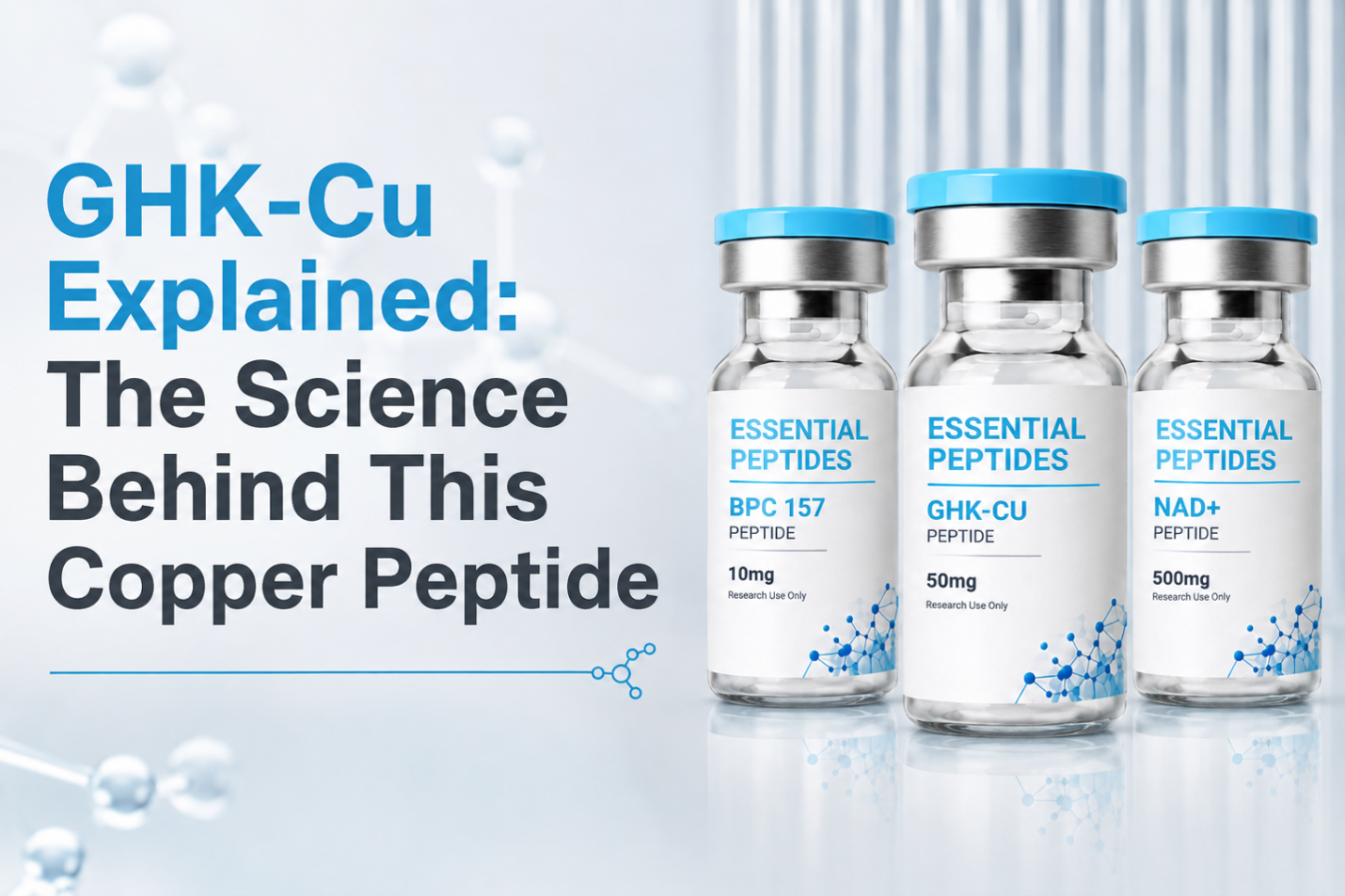
Copper peptides have earned a firm place in modern research circles, and GHK-Cu sits right at the center of that interest. Anyone searching for copper peptide UK suppliers has likely come across this compound already, given how often it appears in skin biology and tissue studies. We put together this blog to break down what GHK-Cu actually is, how it behaves in research settings, and why so many laboratories keep returning to it.
What Is GHK-Cu?
GHK-Cu is a naturally occurring tripeptide bound to a copper ion. The name comes from its three amino acids: glycine, histidine, and lysine. This small structure was first identified decades ago in human plasma, and researchers noticed something interesting early on. Its concentration in the body tends to decline with age.
That observation sparked a wave of scientific curiosity. Why would a naturally occurring peptide drop off over time? What role does it play while it’s present? These questions are exactly why GHK-Cu continues to show up in laboratory research today.
A Quick Look at Its Structure
The peptide itself is tiny compared to most proteins. Three amino acids, one copper ion, and a shape that allows it to bind tightly to copper without much difficulty. This copper-binding ability is not incidental. It appears to be central to how the molecule interacts with biological systems in research models.
Why Researchers Study GHK-Cu
Laboratories across the UK and beyond have examined GHK-Cu for its involvement in several biological processes. We want to be clear here: this compound is intended strictly for laboratory research, not human use. With that said, the scientific interest is substantial.
Some of the areas where GHK-Cu appears frequently in published research include:
- Skin biology studies examining collagen synthesis and tissue remodeling
- Wound healing models looking at cellular repair mechanisms
- Anti-inflammatory research exploring how copper peptides influence signaling pathways
- Antioxidant pathway studies related to oxidative stress management in cell cultures
Each of these areas ties back to the same underlying question. Does copper delivery via a peptide carrier influence cellular behavior in measurable, reproducible ways? Research continues to explore that, and results across various models have kept scientific attention firmly on this compound.
The Copper Connection
Copper is an essential trace mineral, and it plays a role in several enzymatic processes within the body. GHK-Cu’s job, at least from what current research suggests, is partly about transporting copper to where cellular activity needs it. This is a simplified explanation, of course. The actual biochemistry involves multiple pathways that researchers are still mapping out in detail.
How GHK-Cu Fits Into Laboratory Research Peptides
We supply a wide range of laboratory research peptides, and GHK-Cu is one that consistently draws attention from researchers working in cellular biology, dermatological science, and related fields. Its small size makes it relatively easy to work with in controlled settings, and its well-documented history in scientific literature gives researchers a solid foundation to build studies around.
Unlike some newer peptides with limited published data, GHK-Cu benefits from decades of accumulated research. That existing body of work makes it easier to design new studies, compare findings, and build on prior results rather than starting from scratch.
Purity Matters in Peptide Research
Any researcher working with copper peptides knows that purity affects outcomes. A compound with inconsistent purity can introduce variables that muddy results, and nobody wants that in a controlled study. This is why sourcing GHK-Cu UK researchers can trust matters just as much as understanding the science behind the peptide itself.
We test our products where applicable, aiming to give researchers confidence in what they’re working with. Consistency across batches is not something to take for granted in this industry, and it’s a standard we take seriously.
What Makes GHK-Cu Different From Other Research Peptides
Several features set GHK-Cu apart from many other compounds researchers might consider:
- Natural origin – it occurs within the human body, unlike fully synthetic sequences
- Copper-binding capacity – few peptides carry this specific structural feature
- Decades of published literature – giving researchers a strong reference base
- Small molecular size – simplifying handling and storage in laboratory conditions
- Broad research interest – spanning dermatology, wound repair, and cellular aging studies
These characteristics explain why GHK-Cu remains a frequent choice among research-grade peptides UK laboratories rely on for ongoing studies.
Storage and Handling Considerations
Like most peptides, GHK-Cu requires careful storage to maintain stability. Temperature control, proper reconstitution, and correct handling all influence how well the compound performs in a research setting. Researchers typically store it away from light and heat, following standard peptide handling protocols to preserve integrity between uses.
Where the Research Currently Stands
Scientific interest in GHK-Cu has not slowed down. New studies continue to explore its mechanisms, and researchers are still working to fully understand every pathway it interacts with. That’s part of what makes this field so engaging. There’s always another layer to investigate, another variable to test, another model to refine.
We often see researchers combine GHK-Cu studies with broader investigations into copper metabolism, skin aging markers, or tissue repair processes. The compound rarely stands alone in a research design. It tends to fit into a larger picture that scientists are piecing together over time.
A Word on Responsible Research Use
All peptides we supply, including GHK-Cu, are intended solely for laboratory and scientific research. They are not intended for human consumption, diagnostic use, or therapeutic application. Researchers are responsible for ensuring their work complies with relevant regulations and institutional guidelines.
Conclusion
GHK-Cu remains one of the more scientifically interesting copper peptides available for laboratory study, backed by years of published research and a growing list of investigative applications. Understanding its structure, its copper-binding role, and its place within broader peptide research gives scientists a clearer foundation to build their studies on.
At Essential Peptides, we focus on providing consistent, quality-tested research compounds so that laboratories can carry out their work with confidence and clarity.
Frequently Asked Questions
1. Is GHK-Cu approved for human use?
No. GHK-Cu, as supplied for research purposes, is intended strictly for laboratory and scientific study. It is not approved for human consumption, diagnostic use, or therapeutic application.
2. Why do researchers choose GHK-Cu over other copper peptides?
Its natural origin, established research history, and specific copper-binding structure make it a well-documented option compared to many newer or less-studied compounds.
3. What should I check before sourcing copper peptide UK products?
Purity testing, batch consistency, and clear research-use labelling are important factors to review when selecting a supplier for laboratory-grade peptides.
4. How should GHK-Cu be stored for research purposes?
It should be kept away from light and excessive heat, reconstituted properly, and stored according to standard peptide handling protocols to maintain stability between research sessions.