GHK-Cu in Dermatological Research: A Literature Review
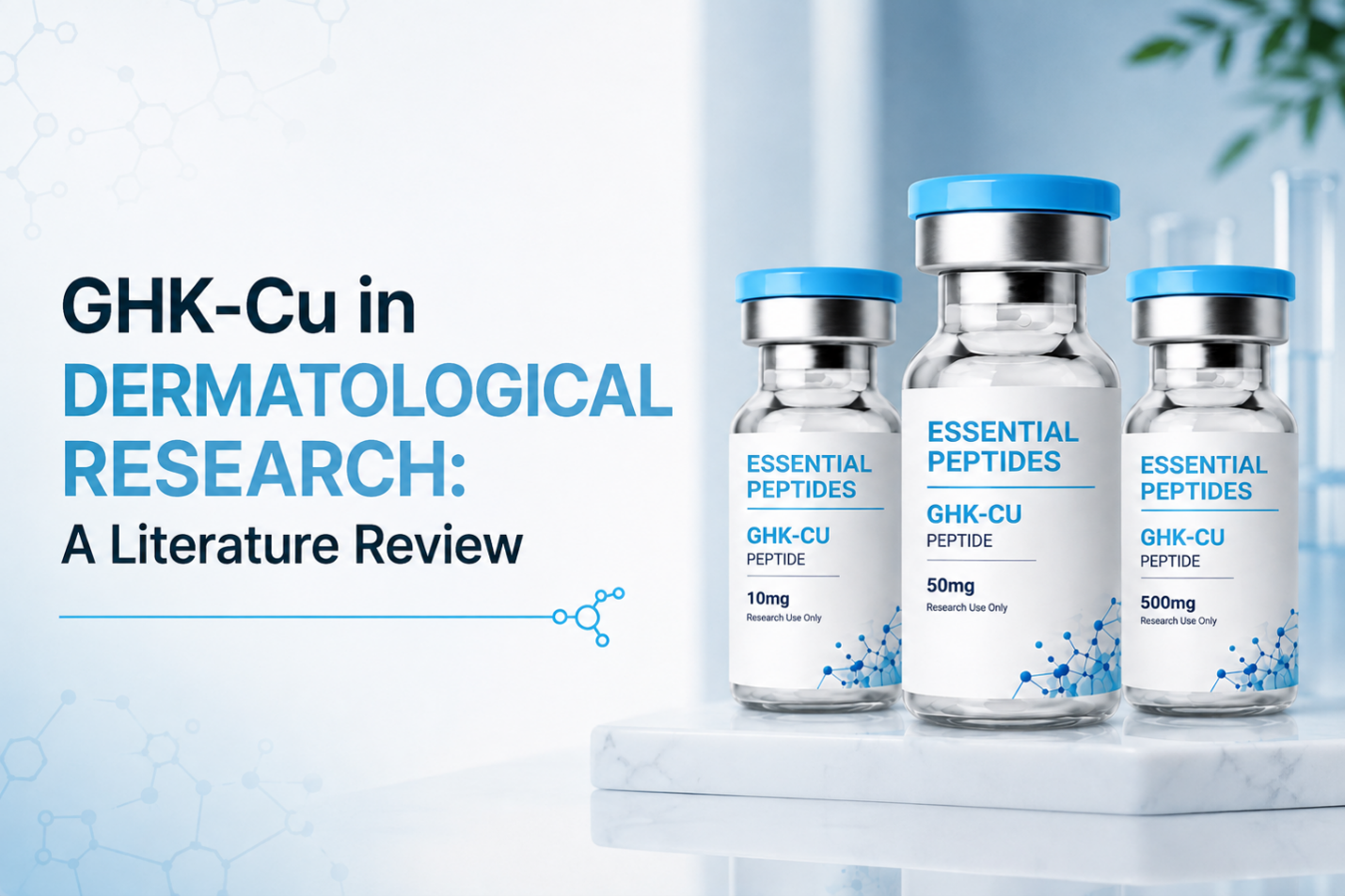
Copper peptides have earned steady attention in skin science circles over the past few decades, and GHK-Cu sits right at the center of that interest. For anyone exploringresearch peptides related to skin biology, GHK-Cu offers one of the richest bodies of published literature available today. This blog walks through what the science actually shows, without overstating what remains under study.
What Is GHK-Cu?
GHK-Cu is a naturally occurring copper complex made of a small peptide, glycyl-L-histidyl-L-lysine, bound to a copper ion. It was first identified in human plasma back in the 1970s. Researchers noticed that its concentration in the body dropped with age, and that observation sparked decades of follow-up work.
The molecule is tiny compared to most proteins. But its size hasn’t stopped scientists from studying it closely across several fields, including dermatology, wound biology, and cellular aging.
The Discovery and Scientific Background
Dr Loren Pickart is generally credited with identifying GHK-Cu’s biological role. His early papers described how the peptide influenced tissue remodeling in laboratory models. That work opened the door to further study across university labs and independent research groups.
Since then, published research has explored GHK-Cu’s interaction with:
- Fibroblast activity
- Copper-dependent enzyme systems
- Cellular signaling pathways tied to tissue repair
- Gene expression patterns linked to skin remodeling
None of this positions GHK-Cu as a finished product with settled conclusions. It remains an active research subject, and that’s precisely why demand for lab-tested peptides UK researchers can trust has grown steadily.
GHK-Cu in Skin Biology Research
Dermatological interest in GHK-Cu centers mainly on three areas. Each has its own body of published work, and each comes with its own caveats worth noting.
Collagen and Elastin Studies
Several in vitro studies have looked at how GHK-Cu affects fibroblasts, the cells responsible for producing collagen and elastin. Findings suggest the peptide may stimulate certain matrix proteins under laboratory conditions.
Worth noting: most of this data comes from cell culture models, not full clinical trials. Extrapolating cell-level findings to whole-organism outcomes is a leap researchers are careful not to make prematurely.
Antioxidant Properties
Copper plays a role in several enzymatic antioxidant systems, and GHK-Cu has been studied for its involvement in this space. Laboratory work has examined how the peptide interacts with oxidative stress markers in skin cell models.
A few things researchers commonly investigate here:
- Superoxide dismutase activity in treated cell cultures
- Changes in markers associated with cellular oxidative damage
- Copper’s broader role in enzyme-driven repair processes
This remains an area with active publication, and conclusions are still being refined as new studies emerge.
Wound Healing Research
Wound repair is probably where GHK-Cu has the deepest research history. Animal studies going back decades examined tissue regeneration timelines, and some papers reported accelerated healing markers in treated models compared to controls.
Again, the distinction between animal research and direct application to humans is significant. Findings from rodent models don’t automatically translate, and reputable literature reviews are careful to flag that gap rather than paper over it.
Why Purity Matters in GHK-Cu Research
Any laboratory working with peptide compounds knows that purity isn’t a minor detail. It’s foundational. A batch with impurities can produce results that simply don’t reflect the compound being studied.
This is where sourcing decisions matter enormously. Researchers looking atGHK-Cu UK suppliers should pay close attention to:
- Independent laboratory verification, not just internal testing claims
- Published or available Certificates of Analysis for each batch
- Consistent purity thresholds, typically 99% or above
- Proper cold-chain storage and handling from production through delivery
Impure or poorly stored material can degrade quickly, particularly with copper-bound compounds, which are sensitive to oxidation and temperature fluctuation. Skipping this step undermines the entire research effort.
Sourcing GHK-Cu for Laboratory Use
Not every supplier offering copper peptide UK stock holds itself to the same standard. Some quieter differences separate a dependable source from one that simply lists a product page.
Things worth checking before ordering:
- Batch-specific testing: Every batch should carry its own verified purity data, not a generic claim applied across the entire product line.
- Transparent documentation: A supplier willing to share a Certificate of Analysis promptly signals a level of accountability worth valuing.
- Storage conditions: Lyophilized peptides need cold, stable storage from manufacture through to the researcher’s freezer.
- Dispatch practices: Fast, discreet, and properly packaged shipping protects sample integrity during transit.
None of this replaces careful experimental design on the researcher’s part. But sourcing genuinely matters, and it shapes whether results are reliable enough to build on.
Reading the Literature with a Critical Eye
Published papers on GHK-Cu vary considerably in scope and rigor. Some are small pilot studies. Others involve more robust sample sizes and controls. Treating every published finding with equal weight is a common mistake.
A few practical habits help when reviewing this kind of literature:
- Check whether findings come from in vitro, animal, or human-adjacent models
- Note sample sizes, since small cohorts often produce less reliable conclusions
- Look for peer review status and publication date, given how quickly this field moves
- Cross-reference findings across multiple independent studies rather than relying on one paper
Dermatological peptide research continues to expand year over year, and staying current means revisiting the literature regularly rather than treating a single review as the final word.
GHK-Cu and Gene Expression Research
Beyond its direct action on skin cells, GHK-Cu has drawn attention for its wider influence on gene activity. Several published studies have examined how the peptide interacts with genes tied to tissue remodeling, inflammation control, and cellular repair signaling.
This line of research uses gene expression profiling to compare treated and untreated cell samples. Early findings suggest GHK-Cu may influence a broad set of genes rather than acting on a single isolated pathway. That breadth is part of what makes it such a compelling subject for continued study, though it also makes the mechanism harder to pin down with precision.
A few points worth keeping in mind when reviewing this data:
- Gene expression studies often involve small sample sizes, so results should be treated as preliminary rather than conclusive.
- Findings can vary depending on the cell type used, which affects how broadly conclusions can be applied.
- Replication across independent laboratories strengthens confidence in any reported effect.
For researchers working with research peptides at the molecular level, this area remains one of the more active and evolving parts of the GHK-Cu literature.
Conclusion
GHK-Cu remains one of the more thoroughly documented copper peptides in dermatological science, with decades of published work spanning collagen biology, oxidative stress, and tissue repair. The findings are genuinely promising, though far from fully settled, and that’s exactly why careful sourcing and rigorous methodology matter so much for anyone working with it. At Essential Peptides, we supply independently tested, research-grade material so that laboratories across the UK can pursue this work with confidence in what’s actually in the vial.
Frequently Asked Questions
Is GHK-Cu approved for human use in the UK?
No. GHK-Cu is supplied strictly for laboratory and scientific research purposes. It is not licensed or approved for human consumption, diagnostic use, or therapeutic application.
What makes GHK-Cu different from other research peptides?
Its defining feature is the bound copper ion, which sets it apart from standard amino acid chains. This structure is central to most of the biological activity researchers study in laboratory models.
How should GHK-Cu be stored for research purposes?
Lyophilised GHK-Cu should be kept below -20°C until use. Once reconstituted, it should be refrigerated and used within the supplier’s recommended timeframe to preserve stability.
Why choose lab tested peptides UK suppliers for GHK-Cu research?
Independent testing confirms purity and identity before a batch reaches your laboratory. Working with a UK-based, lab tested supplier reduces variability and supports more consistent, reproducible research outcomes.