Peptide Purity Standards Explained: What Does 99% Actually Mean?
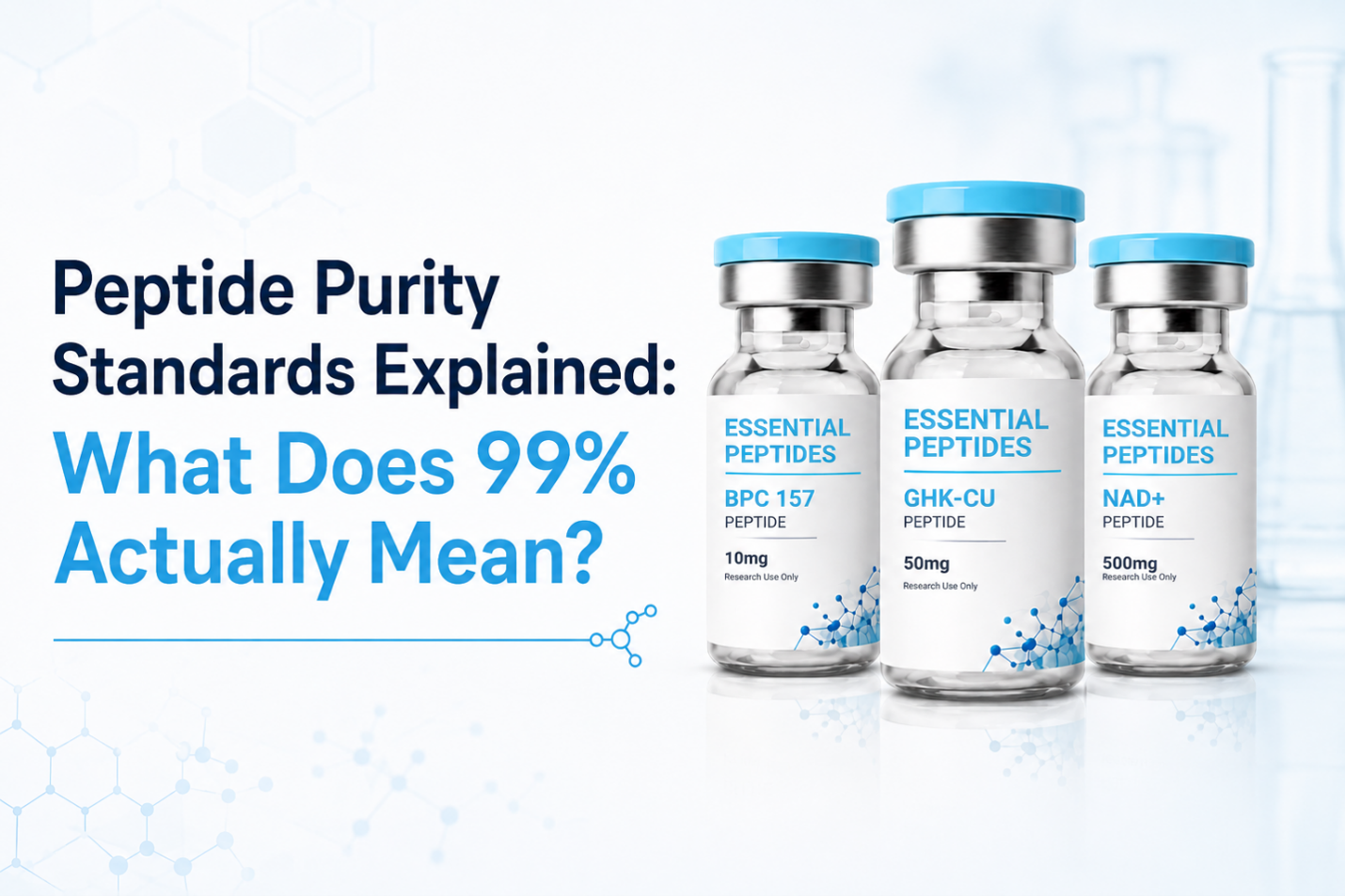
Peptide purity numbers get thrown around a lot these days, and honestly, most buyers never stop to ask what that percentage is actually measuring. A vial says 99% purity, and everyone nods along. But what does that figure represent, and why does it matter so much for anyone sourcinglab tested peptides? This blog breaks it down properly, without the vague marketing language that usually fills this space.
What Purity Percentage Actually Measures
Purity is not a marketing badge. It is a laboratory measurement that tells researchers how much of a sample consists of the intended peptide, compared to leftover impurities from the synthesis process.
When a peptide is manufactured, it goes through a chemical synthesis process, often solid-phase peptide synthesis. During this process, byproducts, incomplete sequences, and residual solvents can end up mixed in with the finished compound.
A purity test separates these components and calculates what percentage of the sample is the actual target peptide. That is where the 99% figure comes from.
The Testing Method Behind the Number
Most reputable suppliers rely on High-Performance Liquid Chromatography, commonly known as HPLC, to determine purity. Here is a simple breakdown of how it works:
- The sample is dissolved and passed through a column under pressure
- Different compounds separate based on their chemical properties
- Each compound produces a distinct peak on a chromatogram
- The area under the main peak, compared to total peaks, gives the purity percentage
This is why research grade peptides UK suppliers frequently mention HPLC testing. It is considered the industry standard for verifying compound purity with a reasonable degree of accuracy.
Why 99% Does Not Mean Perfect
Here is something worth clarifying early. A 99% purity rating does not mean the peptide is flawless or free from every trace impurity. It means 99% of the tested sample matches the intended compound, while the remaining 1% consists of related byproducts or residual materials.
For most research applications, this level is considered highly reliable. Lower purity levels, say 85% or 90%, introduce a wider margin of unknown variables into experimental results. That is a real problem when consistency matters.
Why the Gap Still Matters
A single percentage point might sound small on paper, but scale it up.
- In smaller sample sizes, even minor impurity levels can shift experimental outcomes
- Batch-to-batch inconsistency becomes more likely with lower purity thresholds
- Impurities can interfere with solubility, stability, and reaction behaviour during research use
This is precisely why premium research peptides are positioned around tighter purity thresholds rather than looser ones. The margin for error simply narrows as purity increases.
Independent Testing Versus In-House Claims
Not all purity claims carry equal weight. There is a meaningful difference between a supplier stating their own internal purity figures and a supplier verifying an accredited third-party laboratory.
Independently tested peptides go through an external lab that has no commercial stake in the outcome. This removes the obvious conflict of interest that comes with self-reported figures.
What to Look For in Verification
Genuine verification usually includes a few specific elements:
- A Certificate of Analysis published per batch, not just per product line
- Clear identification of the testing method used, typically HPLC or LC-MS
- A batch number that matches the product received
- Results that show both purity and compound identity, not purity alone
Purity alone does not confirm the compound is what it claims to be. Identity testing, often through mass spectrometry, verifies the molecular structure matches the intended peptide sequence. A sample could technically show high purity while still being the wrong compound entirely. That distinction gets overlooked constantly.
Comparing Purity Claims Across Suppliers
Purity percentages can look identical on paper while representing very different testing rigor behind the scenes. One supplier might base their 99% claim on an internal spot check, while another verifies every single batch through an accredited external laboratory. Buyers rarely see this distinction unless they ask directly. Comparing suppliers on purity alone, without checking how that figure was reached, leaves too much room for assumption.
A more useful approach involves asking which laboratory conducted the test, how recently the certificate was issued, and whether the batch number on the certificate matches the product actually shipped. These small verification steps separate suppliers who treat purity as a genuine standard from those who treat it as a number worth printing on a label.
How Purity Standards Affect Research Reliability
Anyone working with peptides for research purposes depends on consistency between batches. If purity levels fluctuate from one order to the next, results become harder to replicate, and replication is the backbone of credible research.
Storage conditions play a role here too. Peptides degrade under poor handling, regardless of how high the original purity reading was. Temperature-controlled storage, proper reconstitution, and correct handling all preserve the integrity that the original purity test confirmed.
A few practical habits help maintain that integrity after the compound arrives:
- Store lyophilized peptides in a freezer, away from light and moisture
- Reconstitute using appropriate solvents, following documented guidance
- Avoid repeated freeze-thaw cycles, which can break down peptide structure
- Use reconstituted peptides within the recommended timeframe
Choosing a Supplier Based on Purity Documentation
Purity standards are only meaningful when paired with transparent documentation. A supplier that hides testing methods, avoids publishing batch-specific certificates, or gives vague answers about accreditation should raise questions.
Reasonable due diligence includes checking whether the testing lab is named, whether results are dated and batch-specific, and whether the supplier explains their sourcing process rather than relying on generic quality claims.
Purity figures without supporting evidence are simply numbers on a label. Combined with proper documentation, they become a reliable indicator of what researchers are actually working with.
Conclusion
Understanding what a 99% purity figure represents changes how buyers evaluate suppliers altogether. It shifts the conversation from trusting a printed percentage to examining the process behind it, the testing methods used, and whether independent verification backs up the claim.
For researchers who want confidence in what they are working with, purity data paired with proper documentation matters more than the number alone. Essential Peptides applies this standard across its catalog, offering UK-based sourcing with testing practices designed to give researchers clarity on exactly what each batch contains.
Frequently Asked Questions
What does 99% purity mean for research peptides?
It means 99% of the tested sample matches the intended peptide compound, with the remaining fraction consisting of byproducts or residual materials from synthesis.
How is peptide purity tested?
Purity is typically measured using High-Performance Liquid Chromatography, which separates compounds within a sample and calculates the proportion matching the target peptide.
Why should I choose independently tested peptides over in-house tested ones?
Independent testing removes potential bias, since the laboratory has no commercial interest in the results, offering a more reliable purity and identity verification.
Does higher purity guarantee better research results?
Higher purity reduces variability and improves consistency between batches, but proper storage and handling remain equally important for maintaining that quality over time.