Peptide Synthesis Methods: How Research-Grade Peptides Are Manufactured
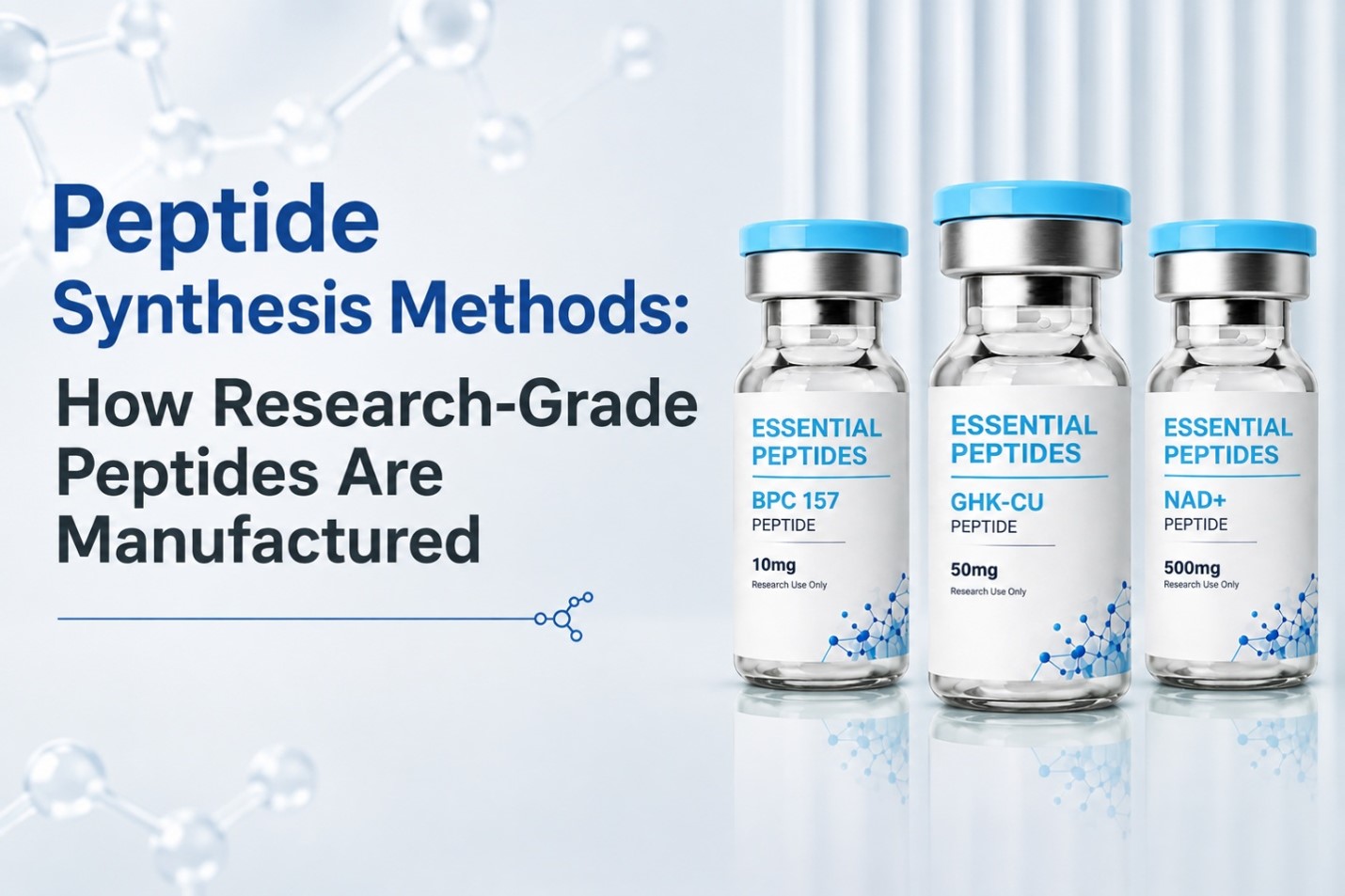
Understanding how peptides are produced is essential for anyone working with these compounds in a scientific or laboratory setting. The manufacturing process directly determines purity, consistency, and reliability, all of which influence the outcome of any study relying on these materials. This blog outlines the core methods used to produce research grade peptides that UK suppliers provide, along with the standards that distinguish dependable manufacturing from inferior production practices.
What Peptide Synthesis Involves
Peptide synthesis is the process of joining individual amino acids together in a precise sequence to form a functional chain. The order and composition of that chain determine the peptide’s structure and its role within biological systems.
Accuracy at every stage is critical. A single incorrect amino acid placement can alter how a peptide behaves, which is why manufacturing precision is treated as a fundamental requirement rather than an optional standard.
Two primary synthesis methods are used within the industry:
- Solid-Phase Peptide Synthesis (SPPS) – The predominant method for producing research peptides
- Liquid-Phase Peptide Synthesis (LPPS) – Used less frequently, generally limited to short sequences or specialized industrial applications.
The majority of laboratory research peptides available today are produced using SPPS, owing to its consistency and scalability.
Solid-Phase Peptide Synthesis: The Established Standard
Solid-Phase Peptide Synthesis was developed in the 1960s and remains the foundation of modern peptide manufacturing. This method anchors the first amino acid to an insoluble resin, then constructs the chain sequentially, applying and removing protective chemical groups at each stage.
The process generally follows these steps:
- Anchoring – the initial amino acid is attached to a solid resin support
- Deprotection – a protective group is removed to expose the reactive site
- Coupling – the next amino acid is added and bonded to the existing chain
- Washing – excess reagents are removed between each stage
- Repetition – the deprotection and coupling stages repeat until the full sequence is complete
- Cleavage – the finished peptide is detached from the resin
- Purification – the raw product is refined to eliminate impurities
This sequential, resin-based approach allows manufacturers to maintain strict control over each addition, which supports the production of premium research peptides at a consistent standard. Much of the process can be automated, while quality monitoring continues at every stage.
The Role of Purification in Peptide Manufacturing
Constructing the peptide chain represents only part of the manufacturing process. Raw synthesis output typically contains byproducts, incomplete sequences, and residual reagents that require removal before the peptide can be considered research-ready.
High-Performance Liquid Chromatography (HPLC) is the primary method used for purification. This technique separates compounds according to their interaction with a stationary phase within a chromatography column, allowing technicians to isolate the target peptide from surrounding impurities.
Purification typically achieves the following:
- Removal of unreacted materials and synthesis byproducts
- Isolation of the target peptide to a defined purity threshold, often exceeding 98 or 99 percent
- Collection of refined samples for subsequent analytical testing
Suppliers offeringlab tested peptides depend heavily on this stage, as purity figures stated on packaging hold limited value without a verified purification process supporting them.
Verifying Quality After Manufacturing
Following synthesis and purification, verification becomes the next essential stage. Independent testing at this point distinguishes suppliers who prioritize transparency from those who do not.
Standard verification methods include:
- Mass spectrometry, which confirms that the molecular weight matches the intended sequence
- HPLC analysis, which quantifies purity as a percentage
- Certificates of Analysis (COAs), which document batch-specific test results
These procedures confirm that the intended compound corresponds accurately to what is contained within the final product. For those sourcing materials for scientific work, this documentation represents a necessary standard rather than an optional addition, ensuring researchers work with verified, well-characterized material.
Storage and Handling Following Production
Manufacturing responsibility extends beyond synthesis and purification. Storage and transport conditions influence peptide stability just as significantly as the production process itself.
Peptides are commonly sensitive to the following factors:
- Temperature fluctuations, which can compromise structural integrity
- Moisture exposure, particularly affecting lyophilized (freeze-dried) forms
- Light exposure, which may cause degradation in certain sequences
Established suppliers store finished peptides under controlled temperature conditions and use insulated packaging during shipping to preserve stability from dispatch through to delivery. This level of attention reflects a properly managed supply chain, distinct from practices that overlook post-production handling.
Common Challenges Encountered During Manufacturing
Peptide synthesis, despite advances in technology, remains a technically demanding process. Certain sequences present recurring challenges that require careful management to avoid compromising the final product.
Some of the most frequently encountered issues include:
- Difficult sequences, where specific amino acid combinations are prone to incomplete coupling or aggregation during synthesis
- Racemization, a chemical reaction that can alter the structure of an amino acid if reaction conditions are not properly controlled
- Deletion sequences, where a step in the chain is inadvertently skipped, resulting in a shorter, non-functional peptide
Manufacturers producing laboratory research peptides address these challenges through refined reaction conditions, careful reagent selection, and rigorous in-process monitoring. Identifying and correcting these issues before purification helps ensure that the final product accurately reflects the intended sequence, supporting the reliability that researchers depend on for their work.
What This Means for Researchers
A clear understanding of the manufacturing process provides researchers with a more accurate basis for evaluating the materials they use. Synthesis method, purification standard, and verification rigor collectively determine whether a compound performs consistently across research applications.
When assessing a supplier, the following criteria are worth reviewing:
- Documented synthesis methodology
- Independent, third-party purity testing
- Batch-specific Certificates of Analysis
- Appropriate cold-chain storage and shipping practices
Together, these factors define what genuinely constitutes premium research peptides, distinguishing verified quality from products that carry the description without substantiating it.
Automated Synthesis and Its Impact on Consistency
Modern peptide manufacturing increasingly relies on automated synthesizers to carry out the repetitive coupling and deprotection cycles involved in chain construction. Automation reduces the variability that can occur with manual processing, allowing each amino acid addition to be executed under tightly controlled conditions.
This shift has had a measurable effect on the reliability of research grade peptides UK manufacturers produce, particularly for longer or more complex sequences.
Conclusion
Peptide synthesis is a structured, multi-stage process, and each stage contributes to the reliability of the finished product. From resin-based chain construction through purification and independent verification, manufacturing decisions directly shape research outcomes. Researchers equipped with this understanding are better positioned to evaluate suppliers and select materials that meet genuine laboratory standards. At Essential Peptides, this understanding of manufacturing practices informs the approach to sourcing and quality assurance across the full product range.
Frequently Asked Questions
1. What is the most common method used to produce research grade peptides UK suppliers sell?
Solid-Phase Peptide Synthesis (SPPS) is the most widely used method, recognised for its precision and scalability across a range of peptide sequences.
2. How is peptide purity measured following synthesis?
Purity is generally measured using High-Performance Liquid Chromatography (HPLC), which separates the target peptide from impurities and determines a purity percentage.
3. Why is a Certificate of Analysis important for laboratory research peptides?
A Certificate of Analysis provides documented, batch-specific confirmation of purity and identity, giving researchers verified evidence of product quality.4. Do all lab tested peptides require the same storage conditions?
Storage requirements vary depending on the peptide, though most require controlled temperatures along with protection from moisture and light to maintain stability from production through to delivery.